
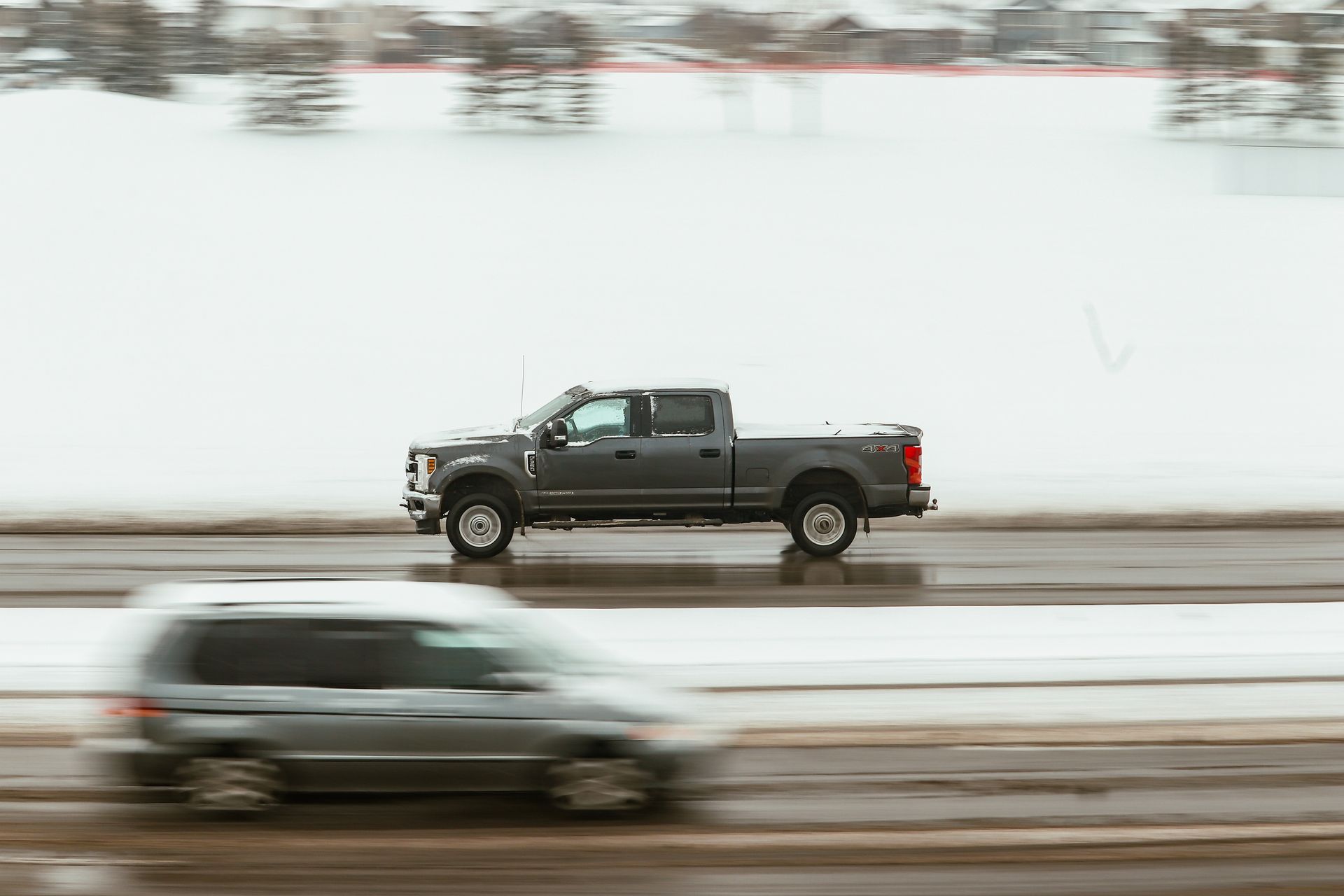
There’s nothing quite like hitting a hill with a loaded diesel truck and feeling it start to bog down. If you’ve noticed your truck having trouble on inclines, especially when towing or hauling, you might be wondering why your diesel truck loses power going uphill. It’s not just “normal diesel behavior,” but a sign that something specific needs attention.
Diesel trucks are built for torque and towing, so struggling on inclines isn’t something to just accept as part of ownership. Let’s go through the most common reasons this happens and what it usually means.
Why Hills Expose Diesel Problems First
Climbing a grade puts more demand on your engine than flat-road driving, especially if you’re towing or carrying a load. Your engine needs more air, more fuel, and better turbo response to maintain power under that extra strain. This is exactly why hills tend to expose problems that might not be obvious during normal, flat driving. If something in the system is even slightly underperforming, an incline is where you’ll feel it first.
Common Causes of Power Loss on Hills
Many issues can cause noticeable power loss, and it’s not uncommon for more than one to be contributing at the same time. Here are the most common culprits behind a diesel truck losing power going uphill:
- Failing or lagging turbocharger – A turbo that’s not spooling up properly can’t deliver the boost your engine needs for extra power, especially under load
- Clogged fuel filters – Restricted fuel flow limits how much fuel actually reaches the engine when you need more of it
- Dirty or failing fuel injectors – Injectors that aren’t delivering fuel properly can cause hesitation and power loss under load
- Clogged air filter – Diesel engines need a lot of air, and a dirty filter restricts that airflow right when you need it most
- DPF or EGR issues – A clogged diesel particulate filter or malfunctioning EGR system can choke performance, particularly under heavy load
- Low fuel pressure – A failing fuel pump can struggle to keep up with the engine’s demands during high-load situations like climbing a grade
Turbocharger Issues Are a Frequent Culprit
Since diesel engines rely heavily on turbocharging for power, a struggling turbo is one of the most common reasons for uphill power loss. Signs of a turbo problem include a whining or whistling noise, visible smoke from the exhaust, or a noticeable delay before power kicks in when you press the accelerator. Turbo issues tend to get worse gradually, so many owners don’t notice it happening until it’s fairly pronounced, often right around the time hills start feeling harder than they used to.
Fuel Delivery Problems
Your engine needs a steady, adequate supply of fuel to maintain power, and anything restricting that flow, whether it’s a clogged filter, failing pump, or worn injectors, shows up most obviously when demand is highest. That’s exactly what happens when you’re climbing a hill or towing a heavy load. If your truck runs fine on flat roads but struggles noticeably on inclines, fuel delivery is one of the first things worth checking.
DPF and EGR Restrictions
Modern diesel trucks rely on emissions systems like the diesel particulate filter (DPF) and exhaust gas recirculation (EGR) system to meet emissions standards, but when these systems get clogged or start failing, they can restrict exhaust flow and choke engine performance. This is especially noticeable under load, which is why a struggling DPF or EGR system often shows up as hill-climbing weakness before it causes other symptoms.
Don’t Ignore It, Even If It’s Intermittent
It’s tempting to write off occasional power loss as “just an old truck thing,” especially if it doesn’t happen every single time. But intermittent power loss is often an early sign of a developing problem, not a random fluke. Catching it early, before a turbo fully fails or an injector completely clogs, usually means a simpler and less expensive repair.
Paying attention to signs your transmission needs attention can help you catch problems before they become major repairs. The same principle applies to your brakes. Addressing issues when they first appear is almost always less expensive than waiting until the damage becomes impossible to ignore.
Why Proper Diagnostics Matter Here
Because there are several possible causes behind uphill power loss, and some of them can overlap, guessing at the problem usually wastes time and money. Proper engine diagnostics can pinpoint whether you’re dealing with a turbo issue, a fuel delivery problem, an emissions system restriction, or something else entirely, so the repair actually addresses the real cause instead of just replacing parts and hoping.
Regular Maintenance Helps Prevent This
A lot of the causes behind uphill power loss are things routine maintenance can help prevent in the first place. Staying on top of fuel filter replacements, air filter changes, and regular diesel oil changes goes a long way toward keeping your engine performing the way it should, hills included. Knowing how often to change diesel oil is one of the easiest ways to protect your engine. Sticking to the right oil change schedule helps reduce wear, improve performance, and prevent expensive repairs over time.
Let Future Auto Repair Diagnose It Right
If your diesel truck has been losing power going uphill, don’t just chalk it up to age or towing too much. At Future Auto Repair, we work on Cummins, Duramax, and Power Stroke engines every day, and we know how to track down exactly what’s causing the power loss, whether it’s the turbo, fuel system, or emissions components.
If your diesel truck has lost power, don’t wait for the problem to get worse. Contact us to schedule a professional diagnosis. Our team will identify the cause and help get your truck back to delivering the performance you expect.