
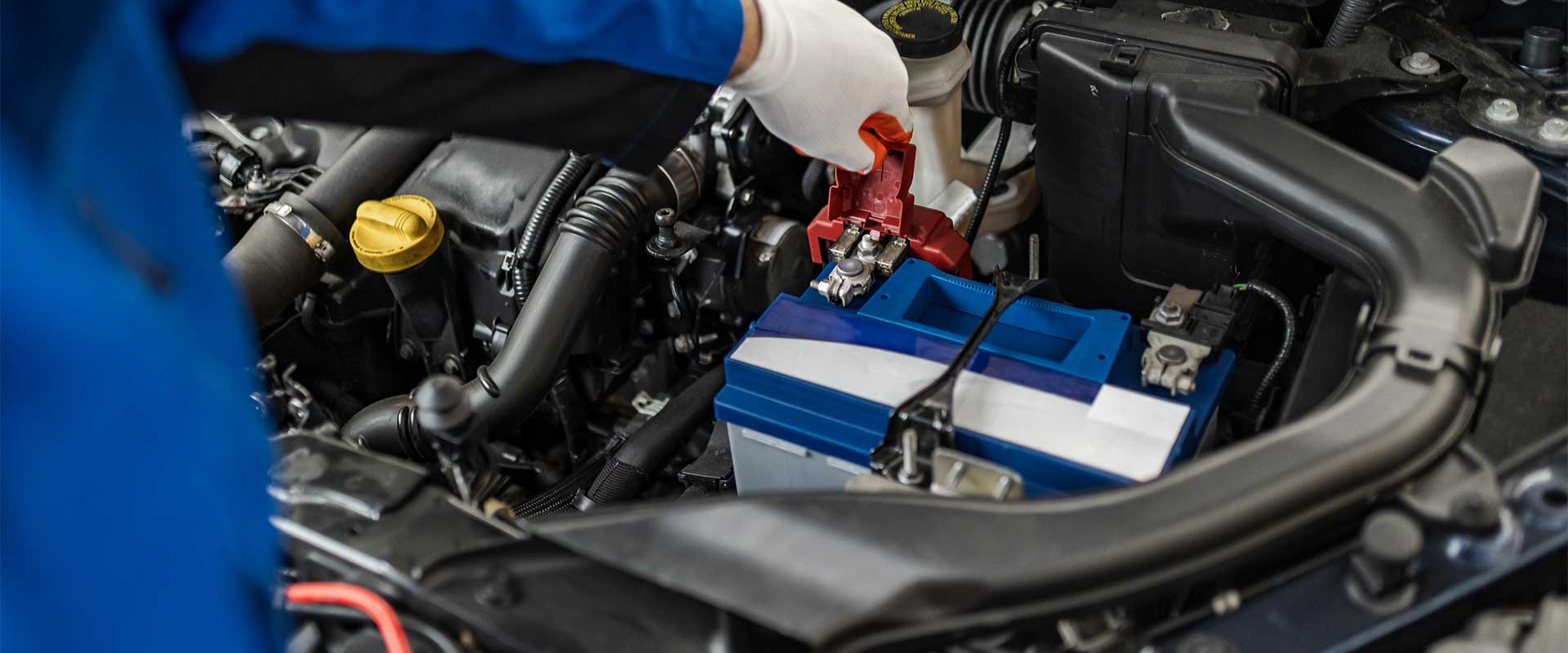
A dead battery never picks a convenient moment, and in a Louisiana summer, it’s even worse. At Future Auto Repair, we offer professional car battery testing in Bossier City, LA, so you never get caught off guard. Your battery powers everything from your starter to your safety systems, and when it starts to weaken, the whole vehicle feels it. A quick test is all it takes to know exactly where you stand. Here’s what we check, why it matters, and when you should come in.
Your Battery Does More Work Than Most Drivers Realize
The battery is the foundation of your entire electrical system. Every time you turn the key, the battery delivers a burst of power to crank the engine. But it doesn’t stop there. It stabilizes the voltage across the whole system while the engine runs, supporting everything from the fuel injectors to the infotainment screen. A weak battery puts strain on every component connected to it.
Heat and humidity hit car batteries harder than almost any other environment. Louisiana’s climate accelerates the chemical breakdown inside the battery, shortening its effective lifespan. Short trips make things worse because the alternator doesn’t get enough time to fully recharge what the starter used. Here’s what a healthy battery needs to keep up with every day:
- Delivering the full cranking amps needed to start the engine reliably,
- Stabilizing electrical output so sensitive systems get consistent voltage,
- Supporting high-draw accessories like the AC, headlights, and charging ports,
- Absorbing voltage spikes to protect the alternator and onboard electronics,
- Holding a charge overnight and through periods of limited driving.
When the battery can’t keep up with those demands, everything downstream suffers. And it usually happens gradually, until one morning it doesn’t start at all.
These Warning Signs Mean Your Battery Needs Attention
Most batteries give you signals first before failing completely. The problem is that those signals are easy to dismiss or blame on something else. A slow crank sounds like it might just be the cold. Flickering lights seem like a loose connection. But these are often the battery telling you it’s running out of time. Watch for these signs and bring your vehicle in for a car battery test if you spot any of them:
- Slow or labored engine crank when starting – the battery is struggling to deliver full power,
- Dim or flickering headlights – especially noticeable at idle or when other electronics are on,
- Battery warning light on the dashboard – a direct signal from the charging system,
- Clicking sound when turning the key – not enough current reaching the starter,
- Electrical oddities – power windows moving slowly, radio resetting, interior lights dimming,
- Visible corrosion on battery terminals – white or greenish buildup choking the connection.
Any one of these is worth investigating. If you’re seeing two or more at the same time, don’t wait and get it tested immediately. The difference between a $200 battery and a $600 tow and emergency repair is usually just catching it in time.
Our Battery Testing Process Covers the Whole System
Testing a battery isn’t just checking if it has a charge. A battery can show a decent voltage reading and still fail under the load of starting the engine. That’s why we use precision diagnostic equipment, not just a basic voltmeter, to give you an accurate, real-world picture of your battery’s condition. Here’s exactly what our car battery testing process covers:
- Visual inspection – checking for cracks, swelling, leaks, corrosion, and loose cable connections.
- Voltage test – measuring resting charge to establish a baseline reading.
- Load test – simulating engine-start conditions to see if the battery can actually deliver under pressure.
- Cold cranking amp (CCA) test – comparing actual output to the battery’s rated specification.
- Reserve capacity check – measuring how long the battery can sustain the system if the alternator fails.
- Charging system verification – testing the alternator and voltage regulator output at the same time.
We test the full charging system because a bad alternator will drain a new battery just as fast as it drained the old one.
Louisiana Weather Is Especially Hard on Car Batteries
Most battery specs are tested at moderate temperatures. In Bossier City, moderate is not the reality. Summer heat accelerates the internal chemical reactions inside the battery, causing fluid to evaporate and plates to corrode faster than they would in a milder climate. A battery that’s perfectly adequate in spring can be marginal by August and dead by September.
Cold snaps, even mild ones by northern standards, create their own problems. Cold temperatures reduce the battery’s ability to deliver cranking amps, while thicker engine oil demands more power to turn over. That combination is what kills borderline batteries on the first cold morning of the year. Here’s when you should prioritize scheduling a battery test:
- Before summer because heat stress is the number one killer of batteries in Louisiana,
- Before winter, even mild cold exposes a weak battery quickly,
- After your vehicle sits unused for a week or more,
- When your battery is three years old or more,
- Any time you notice a warning sign from the list above.
Most car batteries last three to five years, but in Bossier City’s climate, three years is when we start watching closely. Don’t wait for year four to find out.
Battery Failure Is Sometimes a Symptom, Not the Cause
Not every dead battery is the battery’s fault. A weak alternator that isn’t recharging properly will drain a perfectly good battery overnight. A parasitic draw like a module, relay, or accessory pulling current when the car is off, will do the same thing over the course of a few days. Replacing the battery without finding the real cause just means you’ll be back doing it again in a few months.
That’s why we check the entire electrical system during every battery service. Our auto electrical repair diagnostic looks beyond the battery itself to find any underlying issues contributing to the problem. This includes alternator output testing, parasitic draw detection, ground connection inspection, and wiring integrity checks.
We Install the Right Battery for Your Specific Vehicle
Not all car batteries are the same. Modern vehicles, especially European makes, hybrids, and vehicles with start-stop technology, require specific battery types that standard replacements won’t support correctly
Installing the wrong battery in an advanced vehicle can trigger warning lights, damage the charging system, or cause the battery management system to malfunction. Getting the right fit matters. When your battery needs replacement, here’s what our installation service includes:
- Selecting the correct battery type and specification for your exact vehicle,
- Cleaning all terminals and cable ends before installation,
- Securely mounting the battery to prevent vibration damage,
- Verifying the alternator output after installation to confirm proper charging,
- Resetting any electrical codes or settings affected by the power interruption,
- Running a final system check before you leave the lot.
We carry quality batteries for domestic, Asian, and European vehicles, including BMW, Audi, Mercedes, Volkswagen, and other makes that require AGM or EFB batteries. The right battery, installed correctly, is the only way to do it.
We Test Batteries on Every Make and Model We Service
Battery specs, terminal configurations, and charging system designs vary significantly across vehicle types. A diesel truck running a Cummins or Duramax engine needs a battery with much higher cranking amps than a compact sedan. A hybrid vehicle has a completely different battery architecture.
European vehicles often use battery management systems that require registration after a replacement. We handle all of it. We perform car battery testing and replacement across all vehicle categories we service:
- Domestic vehicles – Ford, Chevrolet, Dodge, RAM, GMC, Chrysler, and more,
- Asian vehicles – Honda, Toyota, Nissan, Hyundai, Kia, Subaru, Mazda, and more,
- European vehicles – BMW, Audi, Mercedes, Volkswagen, Porsche, Volvo, MINI Cooper, Land Rover, Fiat,
- Diesel trucks – Cummins, Duramax, and Power Stroke platforms with high-demand electrical systems,
- Hybrid vehicles – auxiliary battery testing and charging system diagnostics.
Whatever you drive, we know what its battery system requires, and we test it accordingly.
Simple Habits That Extend Your Battery’s Life
Car batteries aren’t completely beyond your control. A few easy habits can meaningfully extend battery life and reduce the chances of getting stranded unexpectedly. None of these require tools or mechanical knowledge, just a little awareness about how your vehicle is being used day to day. Build these habits into your routine as part of good preventative car maintenance:
- Take longer drives when possible because short trips don’t give the alternator time to fully recharge the battery.
- Turn off all electronics before shutting the engine off – don’t let accessories drain a static battery.
- Check and clean terminal corrosion periodically – a wire brush and baking soda solution does the job.
- Keep the battery securely mounted because vibration loosens connections and damages internal plates.
- Schedule a battery test every six months or at every oil change visit.
Small habits make a real difference. And pairing them with regular professional testing means you’ll always know where your battery stands before it becomes a problem.
Visit Us for Car Battery Testing in Bossier City, LA
A stranded vehicle in Bossier City’s heat is nobody’s idea of a good time. At Future Auto Repair, our car battery testing service takes just a few minutes and gives you a complete, accurate picture of your battery’s health, and the rest of your charging system too. We catch problems before they catch you off guard.
Whether you’re due for a routine check, noticing warning signs, or just bought a used vehicle and want to know what you’re working with, we’re ready to help. Contact our team today to schedule your appointment or stop by our Bossier City shop. Let’s make sure your vehicle starts strong every single time.
Frequently Asked Questions
We hear the same battery questions all the time, and they’re the right ones to ask. Here are straight answers without the runaround.
Most batteries last three to five years, but Louisiana’s heat often pushes that closer to three.
Sometimes, yes, especially in extreme heat or cold. That’s exactly why regular testing matters.
A bad battery can’t hold a charge; a bad alternator can’t recharge it. They need to be tested separately.
Done incorrectly, yes, because modern vehicles have sensitive electronics that can be harmed by improper jump connections.
Every time. Used batteries are hazardous waste, and we dispose of them responsibly at every service.