
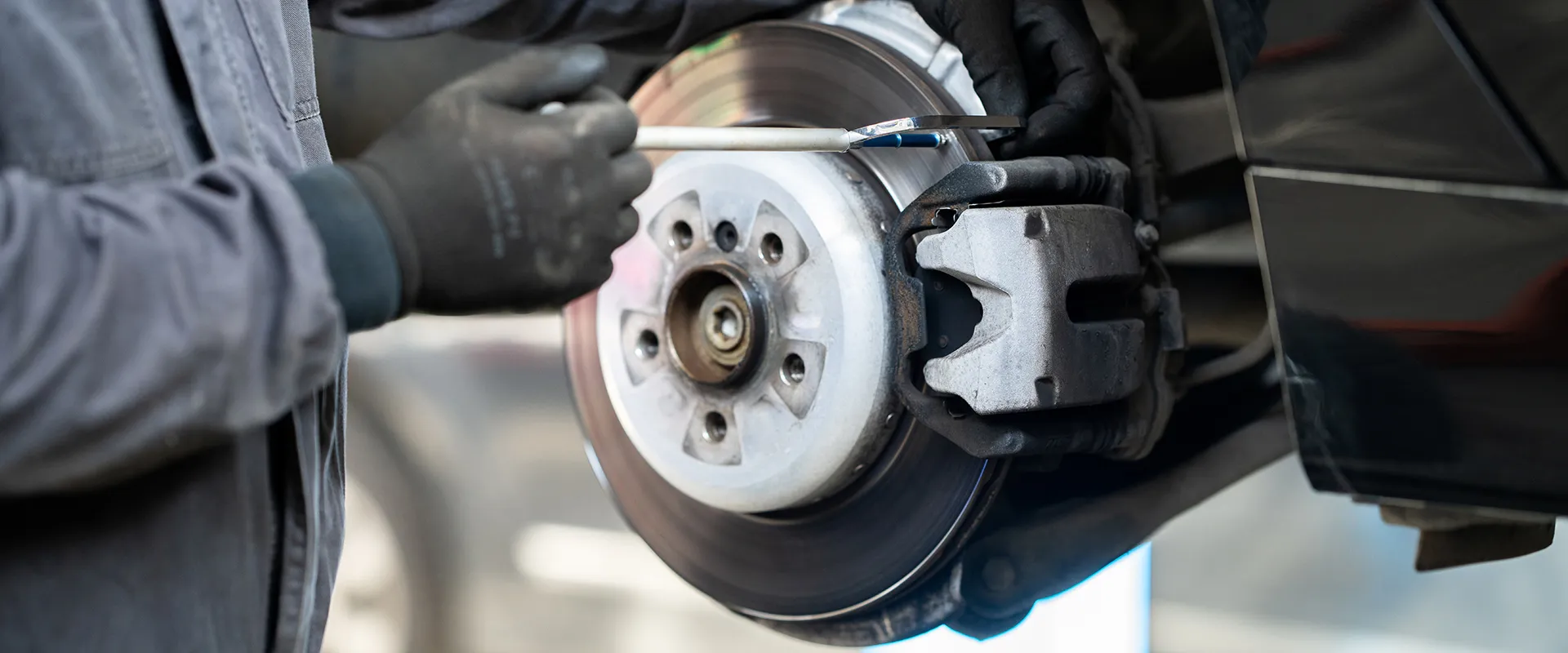
When your brakes aren’t right, nothing else about your vehicle matters. At Future Auto Repair, we provide complete brake repair in Bossier City, LA, for every type of vehicle – from everyday sedans to heavy-duty diesel trucks. Whether your pads are worn, your rotors are warped, or your ABS light just came on, we’ll find the problem and fix it the right way. Your brakes are the most important safety system on your vehicle, and we treat them that way.
Warning Signs Your Brakes Are Trying to Tell You Something
Brakes rarely fail without warning. They communicate through sounds, sensations, and warning lights that something needs attention. The problem is that a lot of drivers learn to live with those signals until it’s too late to catch them cheaply. By the time brakes grind metal-on-metal, the repair cost has already doubled.
Don’t ignore these warning signs and instead bring your vehicle in for a brake inspection if you notice any of them:
- Squealing or squeaking when braking – typically worn brake pads hitting their wear indicator.
- Grinding noise – metal-on-metal contact, which means the pads are gone, and the rotors are being damaged.
- Soft, spongy, or low brake pedal – air in the brake lines or a fluid leak.
- Vehicle pulling to one side when braking – uneven pad wear or a sticking caliper.
- Vibration or pulsation through the pedal – warped or unevenly worn rotors.
- ABS or brake warning light on the dashboard – an electronic fault that needs diagnostic attention.
- Longer stopping distances – reduced braking performance that’s often subtle until it isn’t.
Any one of these is worth a same-day inspection. Multiple symptoms together mean you shouldn’t be driving the vehicle until it’s checked.
Our Brake Repair Service Covers Every Component
A brake system has a lot of working parts, and a problem in any one of them can compromise the whole system. We don’t just swap pads and send you out the door. We inspect the full system on every visit, because a new set of pads on warped rotors or a leaking brake line still isn’t safe. Our full-service brake repair covers every part of the system:
- Brake pad and shoe replacement – using quality parts that meet or exceed OEM specifications.
- Brake rotor and drum resurfacing or replacement – restoring smooth, even braking contact.
- Brake caliper inspection, repair, and replacement – addressing sticking or seized calipers.
- Brake hardware and hardware kit replacement – springs, clips, and shims that affect pad movement.
- ABS system diagnostics and repair – tracing fault codes to the actual source of the issue.
- Brake fluid flush and bleed – removing moisture-contaminated fluid that lowers the boiling point.
- Brake line and hose inspection – checking for leaks, cracks, and pressure integrity.
- Parking brake adjustment – ensuring the emergency brake actually holds.
Every brake repair we complete is followed by a road test to verify performance. We don’t hand the keys back until we’re confident the system is working the way it should.
Diesel Truck Brakes Demand a Different Level of Expertise
A diesel truck’s braking system works harder than almost anything else on the road. The added weight, the towing capacity, and the raw torque of a Cummins, Duramax, or Power Stroke engine all place significantly higher demands on brake components than a standard passenger vehicle.
Standard replacement parts often aren’t enough, and a shop without diesel experience can miss issues specific to these platforms. We specialize in diesel brake service for work trucks, towing rigs, and fleet vehicles. Our diesel-specific brake repair covers:
- Heavy-duty brake pad and rotor installation rated for high-load and high-heat applications.
- Hydraulic brake booster diagnostics and repair – common on diesel trucks and often misdiagnosed.
- Upgraded brake kits for towing and hauling – when stock components aren’t enough for your use case.
- Trailer brake system inspection and adjustment.
- ABS and stability control diagnostics on Cummins, Duramax, and Power Stroke platforms.
- Rear drum-to-disc conversions on applicable models.
If you push your diesel hard, whether it’s a job site truck, a towing rig, or a daily hauler, your brakes need to match that workload.
Brake Repair for Every Make, Model, and Vehicle Type
Brake systems vary quite a bit across different vehicle types. European vehicles often use different caliper designs and pad compounds than domestic vehicles. Asian imports have their own specifications and torque requirements. And hybrid vehicles use regenerative braking systems that interact with the mechanical brakes in ways that require specific knowledge to service correctly. We perform brake repair and brake inspection across all vehicle categories we service:
- Domestic vehicles: Ford, Chevrolet, Dodge, RAM, GMC, Chrysler, and more,
- Asian vehicles: Honda, Toyota, Nissan, Hyundai, Kia, Subaru, Mazda, and more,
- European vehicles: BMW, Audi, Mercedes, Volkswagen, Porsche, Volvo, MINI Cooper, Land Rover, Fiat,
- Diesel trucks: Cummins, Duramax, and Power Stroke platforms with heavy-duty braking requirements,
- Hybrid vehicles: including regenerative braking system service and mechanical brake integration.
ABS and Electronic Brake Systems Need Real Diagnostics
Modern braking systems are far more than mechanical – they’re integrated with electronic stability control, traction control, and advanced driver assistance systems. When the ABS light comes on, it’s not always a straightforward fix. The fault code points you toward a system, not always a specific part. Proper diagnosis matters more than a quick guess.
Our auto electrical repair capabilities extend directly into brake system diagnostics. We use professional scan tools to read ABS fault codes, test wheel speed sensors, evaluate hydraulic control unit function, and trace wiring faults that cause electronic brake system failures.
Brake Fluid Is One of the Most Overlooked Maintenance Items
Brake fluid is hygroscopic – it absorbs moisture from the air over time. As the moisture content increases, the fluid’s boiling point drops. Under hard braking, overheated fluid can vaporize inside the brake lines, causing a sudden and dramatic loss of pedal pressure. This is called brake fade, and it’s more common than most drivers realize, especially in hot climates like Louisiana.
We recommend a brake fluid flush as part of your preventative car maintenance schedule, typically every two years or 30,000 miles, whichever comes first. During a flush, we fully replace the old fluid with fresh fluid that meets your vehicle’s specification, bleed the system to remove any air, and inspect the lines and master cylinder while everything is accessible.
How to Make Your Brake Pads and Rotors Last Longer
Brake components don’t last forever, but how you drive has a significant impact on how quickly they wear. Most brake pads last anywhere from 30,000 to 70,000 miles, depending on driving habits, vehicle weight, and road conditions. Aggressive stop-and-go driving in city traffic wears pads much faster than steady highway miles.
A few habits can meaningfully extend the life of your braking system. Add these to your routine to get the most out of your brakes:
- Brake smoothly and early – hard stops generate heat that accelerates pad and rotor wear,
- Use engine braking when descending hills or slowing from highway speeds,
- Avoid riding the brakes – resting your foot on the pedal creates constant light friction and heat buildup,
- Have brakes inspected at every oil change – catching wear early is always cheaper than waiting,
- Keep brake fluid clean – contaminated fluid contributes to caliper corrosion and uneven wear,
- Rotate tires regularly – uneven tire wear creates uneven braking forces across the axles.
And if you ever hear a new noise or feel a change in your pedal, don’t wait to have it looked at. Small brake issues are almost always cheaper and faster to fix than big ones.
Brake Inspections Are Included in Our Maintenance Visits
You shouldn’t have to make a separate appointment just to know the condition of your brakes. At Future Auto Repair, brake inspections are included as part of our routine maintenance visits. Every time your vehicle comes in for an oil change or preventative car maintenance service, our technicians check brake pad thickness, rotor condition, caliper function, and fluid level.
If we find something developing, we’ll show you exactly what we found and explain your options clearly. We believe in keeping you informed so you can make the right decision for your vehicle and your budget. If the brakes are fine, we’ll tell you that too. Honest service is the only kind we offer.
Book Your Brake Repair in Bossier City, LA
There’s no system on your vehicle more important than your brakes. At Future Auto Repair in Bossier City, LA, we take brake repair seriously because your safety depends on it. From a basic pad replacement to a full ABS diagnostic on a diesel truck, we do it right, we explain everything, and we stand behind our work.
Don’t wait for a grinding noise to become a dangerous situation. Contact us today to schedule your brake inspection or service, or stop by our Bossier City shop. We’ll make sure your vehicle stops exactly when and how it’s supposed to, every single time.
Frequently Asked Questions
Brake repairs raise a lot of questions, especially when you’re not sure how serious the problem is. Here are straight answers to the ones we hear most often.
Anywhere from 30,000 to 70,000 miles, depending on how and where you drive. City driving wears pads much faster than highway driving.
We strongly advise against it because metal-on-metal contact is damaging your rotors every mile and significantly reducing your stopping ability.
Most brake jobs are completed in one to two hours. A full four-wheel brake replacement may take two to three hours.
Not always – if the rotors are within spec and wearing evenly, they can sometimes be resurfaced. We’ll measure and tell you exactly what’s needed.
Usually, it’s air in the brake lines or a brake fluid leak, both of which need immediate attention.