
When your tire pressure warning light is on, that little yellow symbol on your dashboard that looks like a flat tire with an exclamation point tends to show up at the worst possible moments, usually on a cold morning when you’re already running late. It’s easy to ignore or assume it’s nothing, but it’s one of the more important warnings on your dashboard. Understanding what it’s telling you makes a real difference in how you respond. Here’s what it means, why it comes on, and what to do about it.
What the Tire Pressure Warning Light Actually Is
Most modern vehicles are equipped with a Tire Pressure Monitoring System, usually shortened to TPMS, which uses sensors to keep an eye on the air pressure in each of your tires. When pressure drops meaningfully below the recommended level, the system triggers the warning light on your dashboard. It’s a safety feature, designed to alert you before underinflation turns into something more serious, like uneven tire wear, poor handling, or a blowout.
Solid vs. Flashing – Two Very Different Messages
One of the most helpful things to understand is that this light can behave in two different ways, and each one means something different. A light that comes on and stays solid generally means one or more of your tires is low on air. A light that flashes for roughly 60 to 90 seconds when you start the car and then stays solid, on the other hand, usually points to a problem with the TPMS itself rather than your tire pressure. That distinction matters because adding air to your tires won’t fix a system fault, and ignoring a flashing light means the system may no longer be actively monitoring your tires at all.
Why the Light Comes On
A handful of common causes account for most tire pressure warnings. Here’s what tends to trigger them:
- Cold weather. Tire pressure drops by roughly 1 PSI for every 10 degree Fahrenheit drop in outside temperature, which means a tire that was perfectly inflated on a warm afternoon can cross the warning threshold after a chilly overnight temperature drop.
- A slow leak. A small puncture from a nail, a corroded valve stem, or a rim that no longer seals perfectly can cause pressure to drop gradually over days or weeks without any obvious sign.
- Overinflation. Too much air can also trigger the warning on some vehicles, so adding air without checking the actual pressure first isn’t always the right move.
- Recent tire service. If tires were recently rotated, replaced, or repaired, a system that wasn’t properly reset or relearned afterward can trigger a warning even when the pressures are correct.
- A failing TPMS sensor. The sensors inside each wheel run on small batteries that eventually wear out, usually after several years, which can cause a flashing warning or a light that won’t go off.
- A spare tire. On some vehicles, the system flags a warning if you’re running on a spare that doesn’t have its own sensor.
What to Do When the Light Comes On
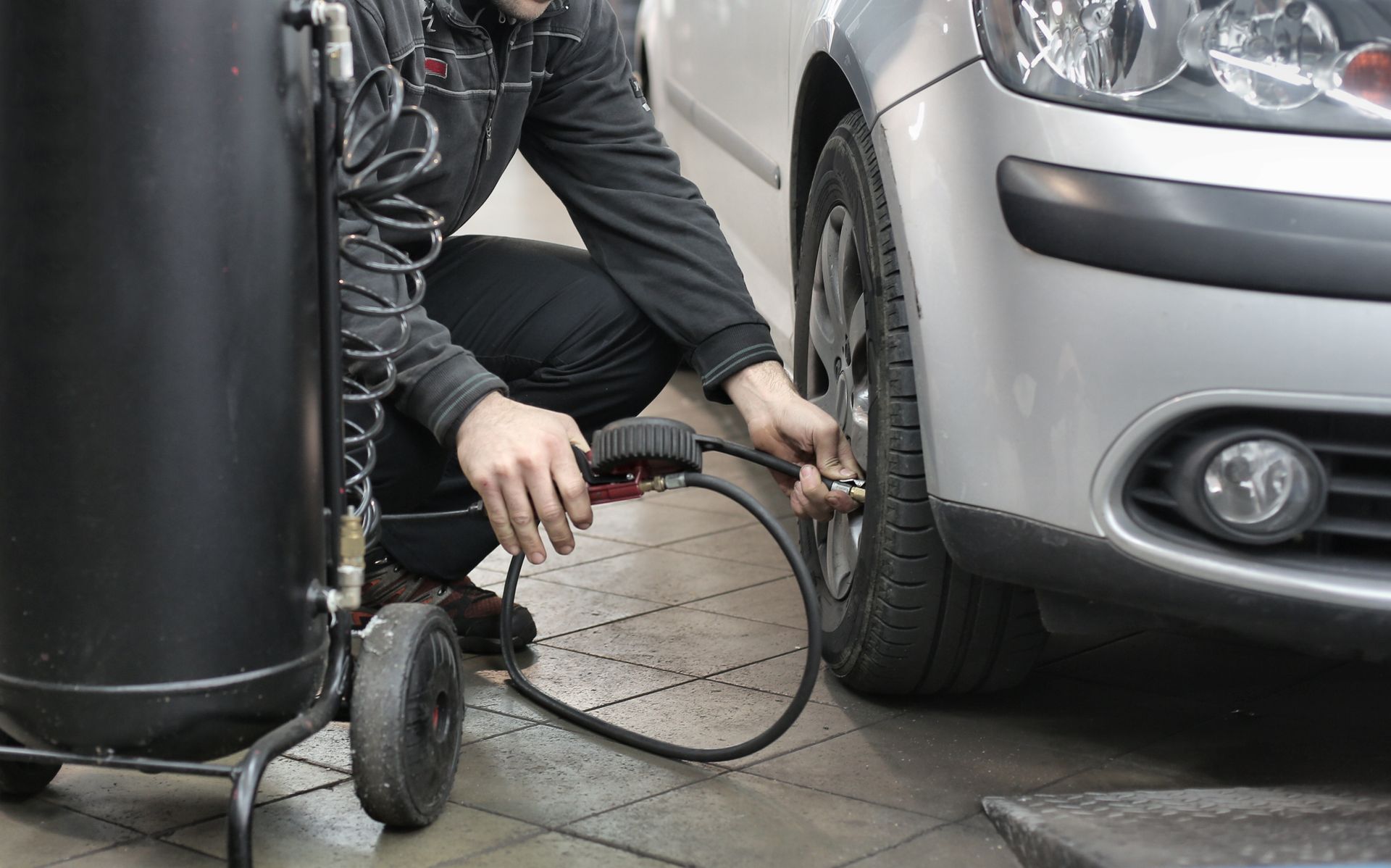
The most useful first step is also the simplest: check the actual pressure in all four tires with a manual gauge, ideally when the tires are cold, either before you’ve driven or after the car has been parked for a few hours. Compare the readings to the recommended pressure listed on the sticker inside your driver’s side door jamb, not the maximum pressure printed on the tire sidewall.
Those two numbers are different, and the door jamb figure is the one that matters for everyday driving. If any tire is low, add air until it reaches the recommended level, and the light should clear within a few miles of driving. If it comes back within a day or two, that’s a strong sign something is actively leaking and worth having inspected rather than just topped off again.
What a Flashing Light Calls For
If the light flashes at startup and then stays solid, adding air won’t help, and it’s worth getting the system looked at instead of continuing to drive and hoping it clears on its own. A TPMS scan can identify whether a sensor has died, stopped communicating, or needs to be reprogrammed after recent tire work. This isn’t an emergency in the same way a rapidly deflating tire would be, but treating it as a low-priority annoyance means driving without any real warning if a tire does start losing air.
Can You Keep Driving With the Light On?
With a solid light, the safest approach is to check your tire pressure as soon as you reasonably can rather than driving for days on a low tire. Underinflated tires wear unevenly, reduce fuel economy, handle less predictably, and generate more heat, which increases the risk of a blowout, particularly at highway speeds or under heavy loads. If the tire looks visibly flat, or you feel the car pulling or handling strangely, stopping safely and addressing it immediately is the better call than pushing on to your destination.
Why Tire Pressure Affects More Than Just the Tires
Low tire pressure doesn’t just wear out your tires faster. It can also affect braking distance, steering response, and how your vehicle handles in emergency situations, and it adds extra strain on suspension components over time. Persistent uneven wear caused by underinflation can also be mistaken for an alignment issue, which is part of why checking tire pressure is a smart first step before assuming you need a wheel alignment or suspension repair.
Building Better Habits
The easiest way to avoid being surprised by this warning is to check your tire pressure manually about once a month rather than relying on the dashboard light alone, since the TPMS typically doesn’t trigger until pressure has already dropped by a meaningful amount, often around 25 percent below the recommended level.
Adjusting pressure as the seasons change, particularly as the weather cools down heading into fall and winter, also helps prevent the cold-morning warning light that catches so many drivers off guard. Folding a quick tire pressure check into your regular preventative car maintenance routine makes it a lot easier to stay ahead of the problem instead of reacting to it.
Don’t Ignore a Light That’s Trying to Help
The tire pressure warning light is one of the more straightforward and genuinely useful warnings on your dashboard, and responding to it promptly is usually quick, inexpensive, and well worth the few minutes it takes. Whether it’s a simple matter of adding air after a cold snap or a sign that a sensor or slow leak needs professional attention, getting ahead of it protects your tires, your fuel economy, and your safety.
Is your tire pressure light on, flashing, or staying on even after you’ve added air? Don’t leave it to chance. Our team will inspect your tires and TPMS to identify the problem and help you get back on the road safely. Contact us today or simply visit us to schedule your appointment.