
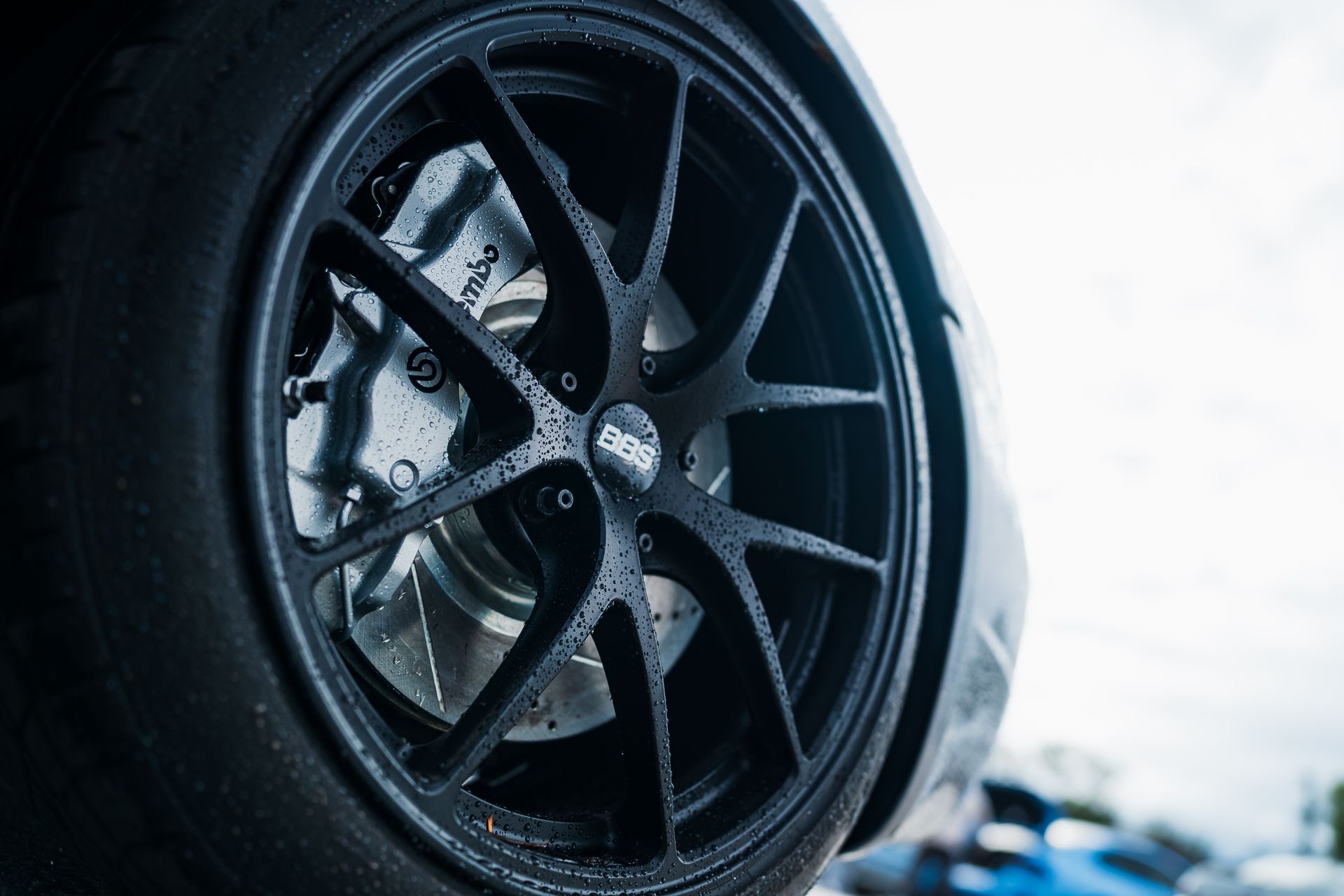
It usually starts quietly. A low hum on the highway that you barely notice at first, then realize has been getting a little louder every week. Or a clicking sound that only shows up when you pull into a parking spot. If you’re hearing a whining noise from your wheels, the cause could be worn wheel bearings, damaged CV axles, or another problem with your vehicle’s wheel assembly. These sounds are easy to tune out, but they’re rarely random. Here’s how to tell the most common causes apart, what each sound might mean, and why it’s worth getting checked sooner rather than later.
The Two Usual Suspects
Wheel bearings and CV axles do very different jobs, but they sit close together and fail in ways that can sound similar to the untrained ear.
A wheel bearing is a set of small steel balls or rollers inside a ring, mounted in the hub at each wheel. Its job is simple but critical: it lets the wheel spin freely with as little friction as possible while carrying the weight of the vehicle.
A CV axle (short for constant velocity axle) is the shaft that carries power from the transmission to the wheels on most front-wheel-drive and all-wheel-drive vehicles. The CV joints at each end are what allow the wheels to keep receiving power while they turn left and right and move up and down with the suspension. Each joint is packed with grease and sealed inside a rubber boot.
Why the Noises Get Confused
Both parts sit near the wheel, both wear out gradually, and both can cause noise and vibration. The difference is mostly in when the noise happens. A good rule of thumb: a hum or growl that follows your speed points toward a wheel bearing, while a click or pop that shows up in turns points toward a CV axle. Paying attention to the pattern of the sound is the fastest way to narrow things down.
What a Bad Wheel Bearing Sounds Like
Wheel bearing trouble usually announces itself as a steady hum, growl, or rumble coming from one corner of the car. Some people describe it as sounding like a distant helicopter or like driving over a rumble strip that never ends. It typically gets louder as you go faster, and it’s often there even when you’re driving straight. Here are the most common signs:
- A humming, growling, or rumbling noise that increases with vehicle speed and continues even on a straight road.
- Noise that changes when you steer. Because turning shifts the car’s weight from one side to the other, a failing bearing often gets louder or quieter as you weave gently left and right. If the noise gets louder when you turn left, the bad bearing is often on the right side, and vice versa.
- Vibration through the steering wheel, floor, or seat that tracks with your speed.
- A loose or wandering feeling in the steering, as if the car doesn’t track as precisely as it used to.
- Uneven or unusual tire wear, since a worn bearing lets the wheel wobble slightly as it rotates.
- Grinding or a knocking sound, which usually shows up when the bearing is severely worn.
- A noise that continues when you coast. Since the wheels are still turning at speed, a bad bearing keeps making noise even when you take your foot off the gas.
What a Bad CV Axle Sounds Like
A failing CV axle sounds quite different. The classic symptom is a rhythmic clicking or popping sound when you turn, especially at low speeds with the steering wheel turned sharply, like pulling out of a parking space or taking a tight corner. The noise usually gets faster as the wheel spins faster and tends to disappear when you drive straight. As the joint wears further, you may also feel a vibration when accelerating, particularly at higher speeds, or hear a clunk when shifting between drive and reverse.
The most common cause of CV axle trouble is a torn rubber boot. Once the boot cracks, the grease inside gets flung out, and dirt and moisture get in, and the joint wears quickly after that. A good clue is grease splattered on the inside of the wheel or on nearby suspension parts.
What About a “Whining” Sound?
Many drivers describe the sound as a whine rather than a hum, and that’s worth a closer look. A whine that changes with speed can come from a worn wheel bearing in its early stages, but it can also come from other drivetrain parts, such as a differential or transmission with low or worn fluid, or even from tires with uneven wear.
This is part of why it helps to have a technician road-test the vehicle and inspect the wheels rather than guess. If the whine is accompanied by humming that varies with speed, the wheel bearings are a likely suspect. If it changes with acceleration or when shifting gears, the cause may be elsewhere in the drivetrain.
Could It Just Be Your Tires?
Sometimes it is. Aggressive tread patterns, uneven wear, and cupped tires can all produce a hum that closely mimics a bad wheel bearing. One helpful clue is that a tire hum often changes when you drive over different road surfaces, while a bearing hum stays largely the same regardless of the road.
Tire noise can also be a sign of an underlying alignment or suspension issue that’s wearing the tires unevenly, which is why it’s worth having the whole picture checked, including your wheel alignment and suspension, rather than looking at the bearing alone. An improperly tightened lug nut can even produce a similar sound, which is another reason a hands-on inspection matters.
How a Mechanic Pinpoints the Problem
Because these noises can overlap, a proper diagnosis usually starts with a road test, followed by lifting the vehicle and checking each wheel by hand. A technician will spin the wheels and listen for roughness, check for play or looseness by rocking the wheel, and inspect the CV boots for tears or grease. This kind of hands-on check is far more reliable than trying to decide based on sound alone, especially on all-wheel-drive vehicles where there are more possible sources of noise.
Is It Safe to Keep Driving?
It’s best not to wait. A worn wheel bearing doesn’t just make noise. As it deteriorates, it can generate heat, damage the hub, and in severe cases cause the wheel to wobble or even separate from the vehicle. That’s rare, but it’s a good reason not to ignore the sound. A failing CV axle can leave you stranded if the joint breaks, and a broken axle means no power gets to that wheel.
Neither one gets better on its own, and delaying a repair often means replacing additional parts like the hub assembly, the brake components, or the tire. If the noise is getting worse quickly, if you feel significant vibration, or if the steering feels loose, it’s a good idea to stop driving and have the vehicle looked at right away.
What the Repair Usually Involves
Wheel bearing replacement typically involves replacing the bearing or the entire hub assembly at the affected wheel, depending on how the vehicle is built. CV axle repair usually means replacing the axle shaft or the affected joint and boot. Both are well within the scope of a good shop and are generally far less expensive when addressed early.
If the vehicle has been driven for a long time with a bad bearing, you may also need brake repair or other work on the surrounding components. It’s also smart to have a wheel alignment checked afterward, particularly if suspension parts were disturbed during the repair. And if your vehicle is an import, a shop with real Asian auto repair or European auto repair experience will know the specific design quirks of your hubs and axles.
Preventing Problems Before They Start
Wheel bearings and CV axles are wear items, so they won’t last forever, but a few habits help them last longer. Avoid slamming into potholes and curbs, which can damage bearings and bend suspension components. Keep an eye out for torn CV boots during routine service, since catching one early can save the whole joint.
Make sure tires are properly inflated, rotated, and balanced, since uneven tire wear puts extra stress on the bearings. And fold a quick wheel and suspension inspection into your regular preventative car maintenance so small problems get caught before they turn into noises.
Hearing a hum, whine, or clicking noise from your wheels? Don’t wait for it to get worse. Contact Future Auto Repair, and we’ll inspect your vehicle, pinpoint the cause, and explain what needs attention before the problem leads to more expensive repairs. Get in touch with our team or stop by to schedule your appointment today.