
Ever wondered – how long do brakes actually last? Brakes are one of those things most drivers do not think about until something feels wrong. By that point, the pads are often already past where they should have been replaced. The honest answer to how long brakes last is that it depends, anywhere from 25,000 miles on the short end to over 70,000 on the long end, depending on the vehicle, the driver, and the conditions. Here is what drives that range.
The Basics: What Brakes Are Actually Made Of
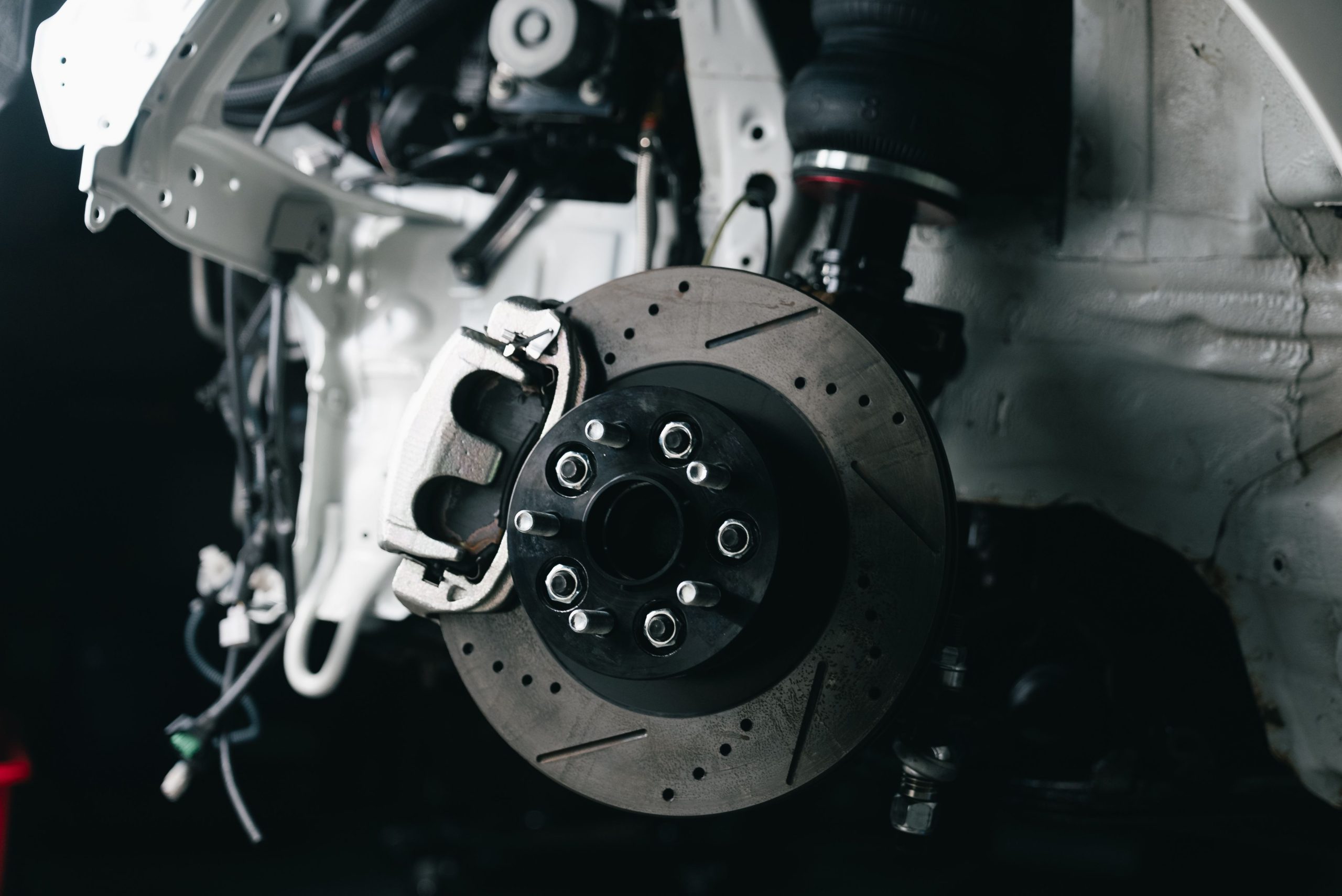
Most modern vehicles use disc brakes on all four wheels, or at a minimum on the front axle, where the majority of braking force is applied. The brake pad is the friction material that clamps against the rotor when you press the pedal. That friction converts your vehicle’s kinetic energy into heat, which slows you down. Every time you brake, a small amount of pad material is worn away. When enough material has worn off, the pad can no longer do its job safely and needs to be replaced.
Brake pads come in different compounds. Organic pads are softer, quieter, and gentler on rotors but wear faster. Semi-metallic pads are harder, more durable, and better at handling heat, making them a common choice for trucks and performance applications. Ceramic pads are long-lasting, produce less dust, and are quieter, though they tend to cost more upfront. The compound your vehicle came with from the factory is matched to its weight, performance profile, and intended use, and switching to a different compound affects both wear rate and braking feel.
What Actually Determines How Long Your Brakes Last
The mileage estimate on a set of brake pads is a starting point, not a guarantee. The factors that actually matter most are:
- Driving style: The single biggest variable. Gradual, early braking preserves pad life significantly. Hard, late braking in stop-and-go traffic burns through pads fast.
- Traffic conditions: City driving with constant stops wears pads faster than highway miles where you rarely touch the brakes.
- Vehicle weight: Heavier vehicles need more braking force. A diesel truck towing a loaded trailer goes through brakes much faster than a compact car.
- Pad material: Organic pads are softer and wear faster. Semi-metallic and ceramic compounds last longer and handle heat better.
- Rotor condition: Worn or warped rotors create uneven contact with the pad, which accelerates wear on both. Healthy rotors and healthy pads go together.
Pads vs. Rotors: What Wears Out First and When
Pads are the wear item that gets replaced regularly. Rotors are designed to last through two or three sets of pads under normal conditions, but only if the pads are replaced before they wear through completely. A pad that grinds metal-to-metal against a rotor can destroy it quickly, turning a straightforward pad replacement into a much more expensive job. The squealing sound you hear when the brakes are getting low is the wear indicator doing exactly what it is supposed to do. When you hear it consistently, do not ignore it.
Rotors also warp from repeated heat cycles, especially when run hot and cooled quickly, like after hard braking through a puddle. A warped rotor causes a pulsating sensation through the brake pedal. Once they are warped or worn below minimum thickness, they need to be resurfaced or replaced.
Signs Your Brakes Are Due for Service
Your brakes will usually give you clear signals before they reach a dangerous condition. None of these should be dismissed or put off:
- Squealing or squeaking – Usually the wear indicator doing its job. A brief squeal when cold or first thing in the morning is normal; squealing on every stop is not.
- Grinding – Means the pad material is gone and metal is hitting metal. The rotor is getting damaged with every stop. This needs attention now, not next week.
- Pulsating or vibrating pedal – A pumping feeling under your foot points to warped rotors, which means less consistent stopping power.
- Pulling to one side – Signals uneven braking force, often from a stuck caliper, uneven pad wear, or a bad brake hose. Makes emergency stops unpredictable.
- Soft or spongy pedal – If it travels further than normal before engaging, you likely have air in the lines or a fluid issue. Get this checked promptly.
Do European and Asian Vehicles Wear Brakes Differently?
Yes, and it is worth knowing. European vehicles from brands like BMW, Mercedes, Audi, Volkswagen, Porsche, and Volvo are often designed with a softer brake pad compound from the factory that provides excellent feel and initial bite but wears faster than what you might find on a domestic or Asian vehicle. It is not unusual for a BMW or Mercedes to go through pads in 20,000 to 30,000 miles, particularly on the front axle. European auto repair specialists know to set that expectation with their customers upfront rather than letting them be surprised by it.
Asian vehicles from Toyota, Honda, Subaru, Nissan, and Hyundai tend to use harder pad compounds that last longer, though braking feel can be less aggressive than European setups. Asian auto repair technicians generally see longer pad intervals on these vehicles under similar driving conditions. Neither approach is wrong. They reflect different engineering philosophies and driver expectations in their respective markets.
How to Make Your Brakes Last Longer
You cannot change your vehicle weight or your commute, but driving habits make a real difference. Braking earlier and more gradually, rather than waiting until the last moment, preserves pad material significantly over time. Coasting down to a lower speed before applying the brakes reduces the energy the pads have to convert to heat on each stop. Avoiding unnecessary hard stops and leaving more following distance in traffic are habits that add up to measurably longer brake life.
Keeping up with routine brake inspections as part of your preventative car maintenance schedule also helps. Catching a pad that is getting close to minimum thickness before it reaches the wear indicator means you replace it on your schedule rather than being forced into a repair when it is inconvenient. It also protects the rotors from the accelerated wear that comes from running pads past their service life.
When to Have Your Brakes Inspected
If your vehicle is approaching 30,000 miles since the last brake service, it is worth having them looked at, regardless of whether you have noticed any symptoms. If you are hearing any of the sounds described above, do not wait for a convenient time. And if you drive a heavier vehicle, tow regularly, or spend a lot of time in stop-and-go traffic, more frequent inspections are simply part of owning that kind of vehicle.
Future Auto Repair handles brake repair and brake inspections for all makes and models in Bossier City, from everyday passenger cars and Asian and European vehicles to diesel trucks and heavy-duty applications. If you are not sure where your brakes stand, contact us, bring it in, and we will give you a straight answer.