
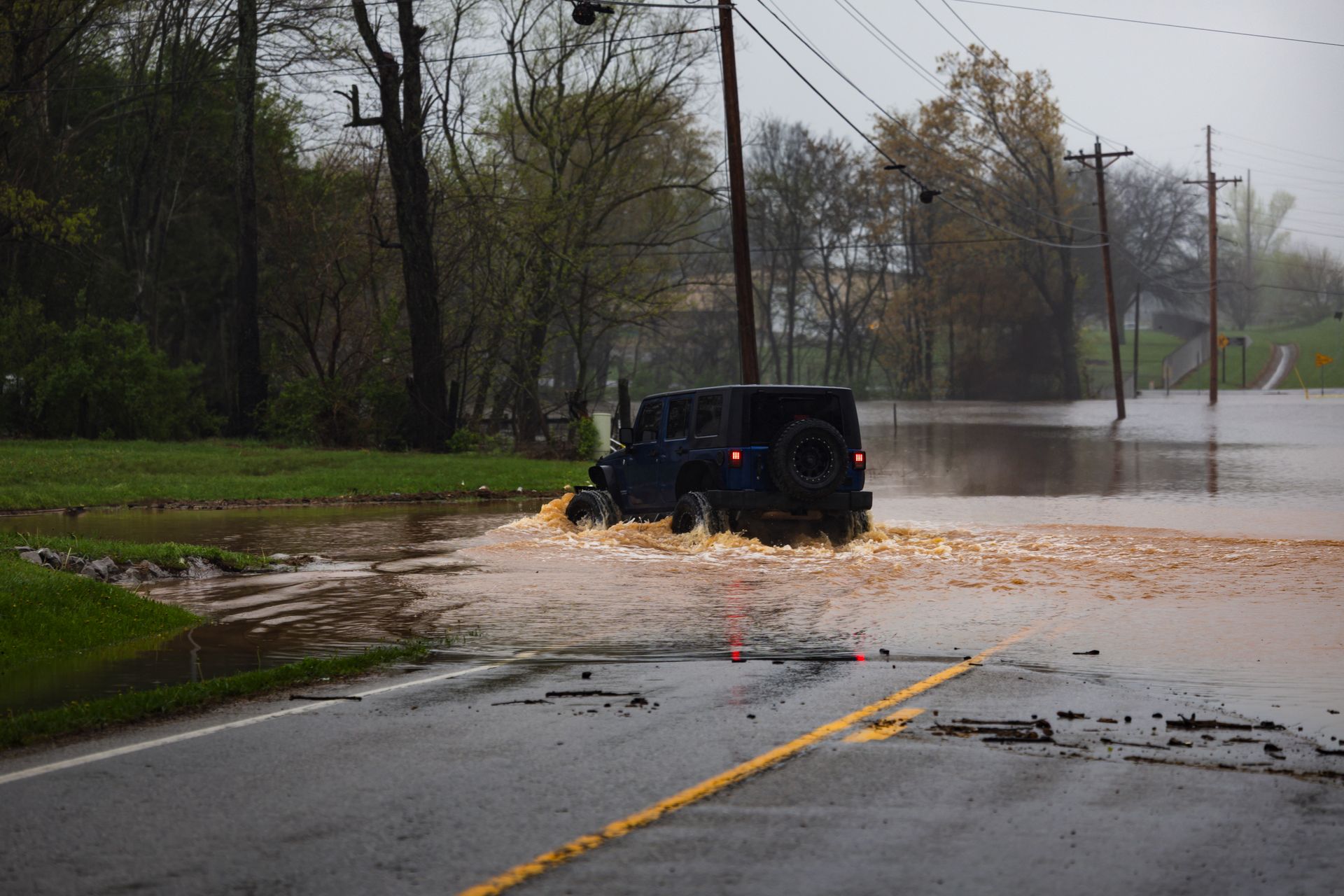
Heavy rain and flash floods can turn a normal commute into a real problem for your car. Even a few inches of standing water can cause damage. If you’ve driven through a flooded road recently, here’s what you need to know about how flooded roads damage your vehicle and what to do about it afterward.
It doesn’t take a dramatic storm to cause trouble, either. A backed-up storm drain, a low spot on your street, or a highway underpass that fills up after twenty minutes of rain can all be enough. Many drivers assume that if the water looks shallow and their car makes it through, everything is fine. In reality, water can find its way into places you’d never expect, and the effects aren’t always immediate. A car can drive perfectly fine the day of the flood and start showing serious problems a week or two later.
Why Flooded Roads Are So Hard on Cars
Modern vehicles are packed with sensitive electrical parts, fluids, and mechanical systems that simply aren’t built to sit in water. When floodwater rises even to the bottom of your doors, it can seep into places that were never meant to get wet. The result is often damage that shows up days or even weeks later, long after the water has dried up and you’ve forgotten about the drive home in the rain.
Water is also dirty. It carries mud, salt, oil, and debris from the road, which can work its way into your engine, transmission, and electrical connections. That combination of moisture and grime is exactly what causes long-term corrosion and mechanical failure.
Common Types of Flood Damage
Different systems in your car react differently to water exposure. Here’s a look at what’s most commonly affected when a vehicle drives through or sits in floodwater:
- Engine damage – Water pulled into the engine through the air intake can cause “hydrolock,” where water fills the cylinders and stops the engine from turning over. This is one of the most serious and expensive types of flood damage, and it often calls for a full engine diagnostics check before you even think about driving again.
- Electrical system issues – Fuses, wiring, sensors, and control modules can short out or corrode after water exposure, leading to problems that may need auto electrical repair, alternator repair, or car battery testing to sort out.
- Brake problems – Water and mud in the brake lines or on the rotors can reduce stopping power and cause premature wear, which is why brake repair is one of the first things to check after driving through water.
- Transmission trouble – If water gets into the transmission fluid, it can break down lubrication and lead to slipping, rough shifting, or worse, often requiring transmission repair.
- Suspension and wheel issues – Submerged potholes and debris hidden under water can knock your wheels out of alignment or damage suspension components, so a wheel alignment and suspension repair check are smart moves afterward.
- Cooling system contamination – Floodwater can get into the radiator and cooling system, leading to overheating issues that need radiator repair.
- Starter motor failure – Because it sits low in the engine bay, the starter is especially vulnerable to water intrusion, sometimes requiring starter repair.
Whatever make and model you drive, flooding doesn’t discriminate. Domestic auto repair, Asian auto repair, and European auto repair shops all see a spike in flood-related visits after major storms. It doesn’t matter whether it’s a Power Stroke or Duramax pickup with a Cummins engine, a Mercedes or BMW sedan, or a hybrid car with high-voltage components that need special attention.
What to Do If You Drove Through Flooded Water
If you’ve already driven through standing water, don’t just hope for the best. Here’s what to do:
- Don’t restart the engine if it stalled in water. Trying to start a flooded engine can force water further into the cylinders and turn a repair job into a full engine replacement.
- Check your oil and other fluids. If the oil looks milky or diluted, water has likely gotten in, and an oil change is probably overdue.
- Get it towed to a trusted auto repair shop. Skip the DIY diagnosis because a proper inspection can catch problems before they turn into breakdowns.
- Ask for a full inspection, including brakes, electrical connections, and the transmission, not just a quick look under the hood.
- Keep an eye out for warning signs over the next few weeks – strange smells, flickering dashboard lights, or a check engine light are all signs that water damage is still working its way through your car’s systems.
Preventative Steps for Next Time
You can’t control the weather, but you can reduce your risk. Avoid driving through standing water whenever possible, even if it looks shallow because it’s easy to misjudge depth, especially at night. If you regularly drive in flood-prone areas, staying on top of preventative car maintenance makes a real difference. Well-maintained seals, a healthy cooling system, and clean electrical connections are all more resistant to water intrusion than a car that’s already overdue for service.
Routine care like car battery testing, checking the air conditioning system for moisture buildup with a car air conditioning repair inspection, and keeping your engine diagnostics up to date can help your mechanic spot small issues before a flood turns them into big ones.
When in Doubt, Get It Checked
Flood damage isn’t always visible right away, and driving on it without knowing what you’re dealing with is a real safety risk. Even a short trip through a flooded road is worth a professional look, especially when it comes to your brakes, engine, and electrical system.
If you’ve recently driven through flooded roads, don’t wait for a warning light to tell you something’s wrong. Bring your vehicle to a shop you trust for a full inspection because catching flood damage early can save you from a much bigger repair bill down the road. Contact us today to schedule your post-flood inspection.