
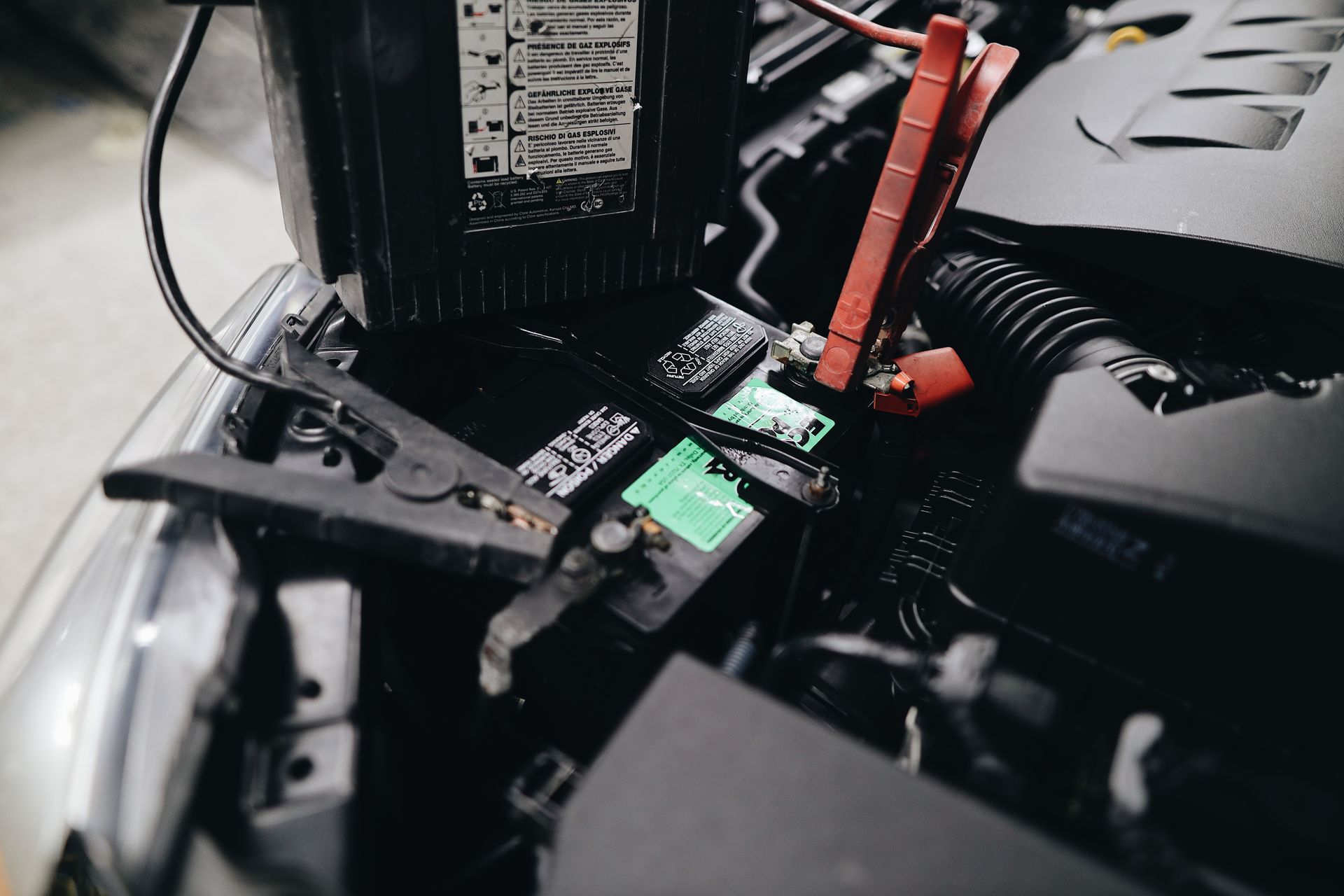
You turn the key (or hit the button) and… nothing. Or maybe you hear a click, a whir, or a grinding noise, but the engine just won’t turn over. It leaves you wondering – why won’t my car start? It’s one of the most frustrating moments as a driver, mostly because there are several different things that could be causing it, and they all feel the same in the moment: your car simply won’t start.
While a dead battery is the most common culprit, it’s far from the only one. A failing starter is another frequent cause, and knowing the difference can save you time, money, and a lot of guesswork. Let’s walk through how to tell what’s actually going on.
What the Starter Actually Does
The starter is a small motor whose only job is to get your engine turning over so it can fire up and run on its own. It draws power from the battery, engages with the engine briefly, and then disengages once the engine is running. It’s a simple job, but it’s an important one, and when the starter fails, your engine simply has no way to get going, even if everything else in the car is working perfectly.
Signs You’re Dealing With a Starter Problem
If you’re noticing consistent silence, clicking, or grinding rather than a slow or weak crank, the starter is often the more likely explanation than the battery. But here’s what tends to point specifically toward a failing starter rather than a battery or electrical issue:
- A single click when you turn the key, but the engine doesn’t crank – This often means the starter solenoid is engaging, but the starter motor itself isn’t turning the engine.
- A grinding noise when starting – This can mean the starter gear isn’t properly engaging with the engine’s flywheel.
- Intermittent starting issues – The car starts fine sometimes and not other times, with no clear pattern related to temperature or how long it’s been sitting.
- Starting problems that don’t improve after a jump start – If jumping the battery doesn’t help at all, the starter is a likely suspect.
- A whining noise without the engine turning over – This can point to a starter drive or gear problem.
- Smoke or a burning smell from under the hood after attempting to start – This can indicate the starter is drawing too much current and overheating.
How This Differs From a Battery or Alternator Problem
A weak battery usually causes slow, labored cranking, like the engine is trying to turn over but doesn’t quite have the strength to catch. A failing alternator tends to show up more while you’re driving, with dimming lights or the car dying after running for a while, and often responds temporarily to a jump start before the same symptoms return. A failing starter, on the other hand, usually causes either complete silence, a single click, or a grinding sound, with little to no cranking at all, regardless of how strong the battery is.
That said, these systems are connected enough that it’s easy to misdiagnose the issue without a proper test, especially since battery and alternator symptoms can sometimes overlap with early starter trouble too.
Common Causes of Starter Failure
Starters don’t usually fail without reason. A few common causes include normal wear and age, since starters are mechanical components that simply wear out over time like any other part. They also include corroded or loose electrical connections, which can prevent the starter from getting the power it needs even if the starter itself is fine. Heat exposure, since starters are mounted close to the engine and repeated heat cycles can wear down internal components faster. And a worn starter solenoid, which is a common failure point separate from the starter motor itself, and can cause that telltale single click without any cranking.
Quick Checks You Can Do Yourself
Before assuming the worst, there are a couple of quick things worth checking. Make sure your battery terminals are clean and tightly connected, since a loose or corroded connection can sometimes mimic starter symptoms. If you have someone available to help, turn the key while listening closely near the engine bay for clicking, grinding, or complete silence, since the specific sound is a big clue toward what’s actually happening. Beyond that, most starter issues really do need a proper diagnostic to confirm.
Why an Accurate Diagnosis Matters
Starters, batteries, and alternators can all cause a car that won’t start, and replacing the wrong one means spending money without actually fixing the problem. A proper diagnostic check tests each component individually, the battery’s ability to hold a charge, the alternator’s charging output, and the starter’s actual function, so you know exactly what’s failing instead of guessing based on symptoms alone.
This kind of accurate, one-issue-at-a-time diagnosis is especially important heading into extreme temperature swings, when several of these components tend to get pushed to their limits at the same time.
Don’t Ignore Early Warning Signs
If your car has started acting up intermittently (one slow crank here, one unusual click there), it’s tempting to just wait and see if it happens again. But starter problems tend to get progressively worse rather than resolve on their own, and waiting until you’re completely stranded is a lot less convenient than catching it during a routine visit.
Let Future Auto Repair Get You Back on the Road
If your car won’t start and you’re not sure whether it’s the battery, alternator, or starter, don’t waste money guessing. At Future Auto Repair, we diagnose starting issues accurately for drivers throughout Bossier City, LA, so you get the right repair the first time.
Contact us or visit us at 2250 Benton Road, Bossier City, LA, for expert diagnostics. A quick inspection today can help prevent unnecessary repairs and get your vehicle running again sooner.