
The clocks fall back and suddenly your evening commute is in the dark. It happens every year, and every year most drivers aren’t quite ready for it. The fall time change quietly makes driving more dangerous almost overnight. The question arises – is your car ready for the time change?
Imagine – you’re driving the same roads at the same times, but now you’re doing it in conditions that are fundamentally different. Less light means less reaction time, less visibility, and a higher chance that something goes wrong. However, a few straightforward checks on your vehicle can make a real difference. Here’s what to look at before the days get short.
Why the Time Change Is a Bigger Deal Than Most Drivers Think
Studies consistently show that traffic accidents increase in the days following the fall time change. The reason isn’t just fatigue from the schedule shift, but the fact that millions of drivers suddenly find themselves commuting in the dark when they’ve spent months doing it in daylight. Roads that feel familiar in bright afternoon sun feel different at dusk or after nightfall. Pedestrians, cyclists, and animals are harder to see. Depth perception changes in low light.
In Louisiana, fall also brings its own visibility challenges. Early morning fog is common across the flat, low-lying areas around Bossier City. Deer movement increases significantly in October and November. And while our winters are mild compared to much of the country, fall rain combined with darkness creates slick roads that catch drivers off guard after months of dry summer driving. Your vehicle’s lighting and visibility systems matter more in the next few months than they have all year.
Headlights – the Most Important Check on This List
Dim, yellowed, or misaimed headlights are one of the most common, and most dangerous, vehicle issues we see during fall inspections. Halogen headlight lenses oxidize over time, developing a foggy or yellowish coating that can reduce light output by 50 percent or more. A headlight that looks acceptable during daylight reveals its true inadequacy the moment you’re driving a dark rural road outside Bossier City at 60 miles per hour.
Headlight aim is equally important and even more overlooked. A headlight pointed too low illuminates only the pavement immediately in front of you, giving almost no advance warning of what’s ahead. One aimed too high blinds oncoming drivers without improving your own visibility. Both conditions are dangerous, and both are common on vehicles that have had any front-end work, suspension changes, or even just years of road vibration gradually shifting the housing.
Tail Lights, Brake Lights, and Turn Signals
You can’t see your own brake lights from behind the wheel, which is exactly why burned-out bulbs stay unnoticed for so long. A missing brake light is a rear-end collision waiting to happen, especially in wet fall conditions where stopping distances are longer, and following drivers have less time to react. The same applies to a non-functioning turn signal. In low-light conditions, other drivers rely on your signals far more than they do during the day.
Walk around your vehicle with the lights on, the brakes applied, and the hazards flashing before the time change hits. Check every light: headlights, taillights, brake lights, turn signals front and rear, reverse lights, and side marker lights. It takes about two minutes and costs nothing. If a bulb is out or dim, replace it before the dark season starts.
Wiper Blades and Washer Fluid
Louisiana’s fall rain season makes wiper blade condition a safety issue, not just a comfort one. Wiper blades degrade from UV exposure, heat cycling, and the general wear of use, and after a Louisiana summer, most blades are due for replacement. A blade that streaks, skips, or leaves a hazy film across the windshield in a nighttime rainstorm is one of the most disorienting visibility problems a driver can face.
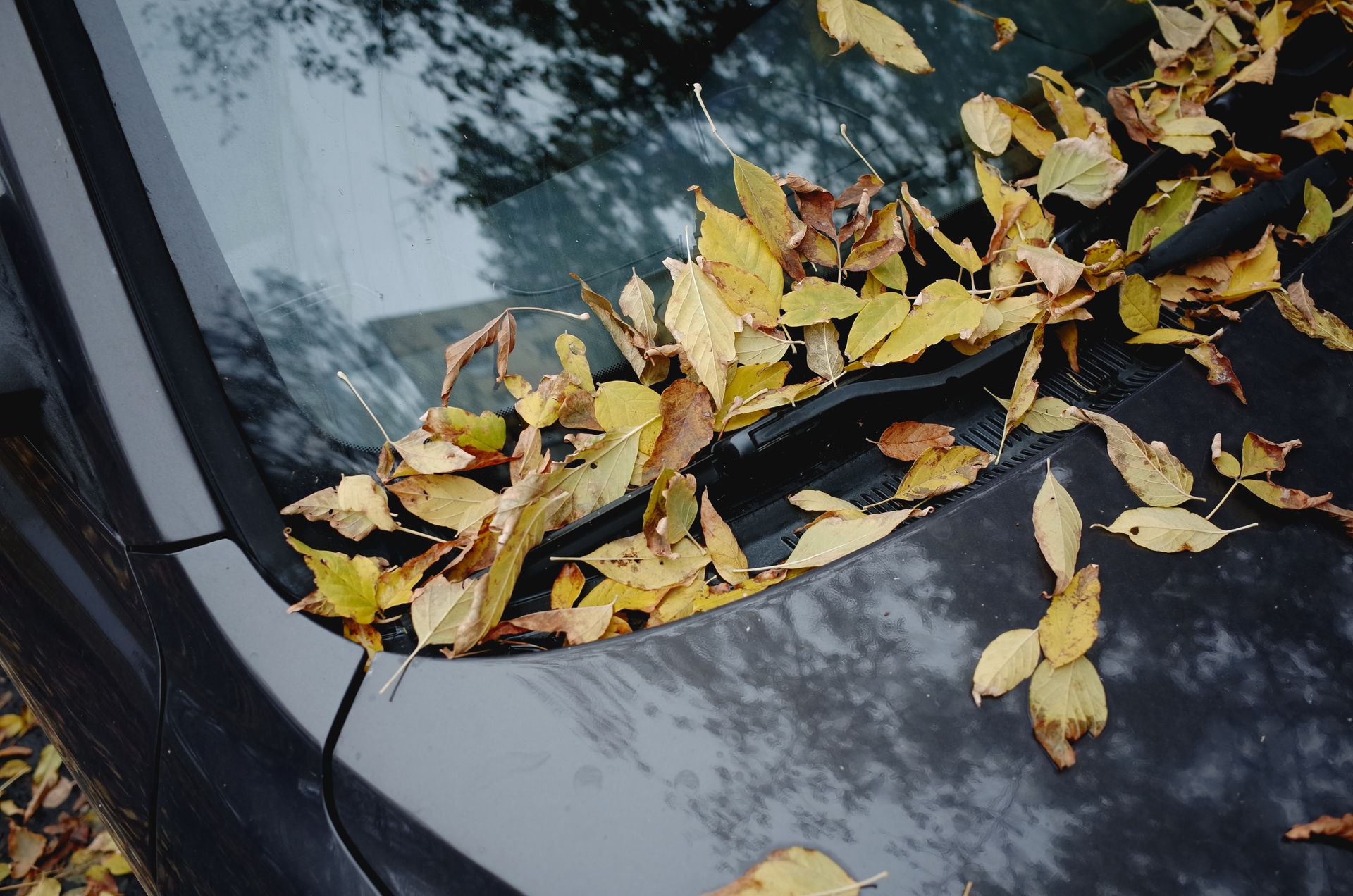
Washer fluid matters too, and not just for rain. Fall brings bugs, road grime, and leaf debris that accumulate on the windshield and create smearing that no amount of dry wiping fixes. Make sure your reservoir is full and that the fluid you’re using includes a cleaning agent, not just water.
Defroster and Defogger for Your Windshield Clarity
Morning fog and temperature differentials between the warm cabin and cool outside air create windshield fogging that can be almost instantaneous, and nearly blinding if your defroster isn’t working properly. The front defroster runs through your vehicle’s heating and AC system, using both heat and the AC compressor to pull moisture out of the cabin air. If the AC compressor has an issue (something that might not have been obvious during summer use), the defroster will underperform exactly when you need it most.
The rear defroster is a separate electrical system – those thin lines embedded in the rear glass. They’re easy to forget about until a foggy October morning makes it impossible to see out the back. Turn on the rear defroster and check that the entire grid heats evenly. A broken element shows up as a strip of glass that stays fogged while the rest clears, and it’s a simple repair that most drivers put off until it actually causes a problem. Don’t be that driver this fall.
Battery Because Cold Mornings Expose Every Weakness
Louisiana’s fall doesn’t bring the extreme cold of northern states, but even mild temperature drops put measurable stress on a weakened battery. A battery that starts the car reliably through summer heat may struggle on a 40-degree November morning. It’s because cold temperatures reduce a battery’s ability to deliver the cranking amps the starter motor needs.
Fall is one of the two best times of year to have your car battery tested, the other being spring before summer heat arrives. If your battery is three years old or more, or if you’ve noticed any slow cranking, electrical oddities, or dim lights, get it tested before the cold mornings arrive. A battery test takes just a few minutes and tells you exactly where the battery stands relative to its rated capacity.
The Full Fall Visibility Checklist
Before the time change puts you in the dark for your daily commute, work through this checklist. Most of these checks take minutes, and several are free, but together they make a meaningful difference in how safely your vehicle handles the fall driving season:
- Headlights: check brightness, lens clarity, and aim; restore oxidized lenses if fogged or yellowed.
- Tail lights and brake lights: walk around with lights on and brakes applied to verify all bulbs are working.
- Turn signals: check front and rear on both sides.
- Wiper blades: replace if streaking, skipping, or leaving a hazy film.
- Washer fluid: top off with a cleaning formula, not plain water.
- Front defroster: run it and verify the windshield clears fully within a few minutes.
- Rear defroster: check that the full grid heats evenly with no broken elements.
- Battery: test if three years or older, or if any slow-crank symptoms have appeared.
- Headlight aim: have it checked and adjusted if front suspension or bodywork has been done recently.
Run through this list now, while you still have daylight to work with. A little preparation before the time change is far easier than troubleshooting a visibility problem in the dark on a rainy November evening.
We’ll Check It All at Future Auto Repair
At Future Auto Repair in Bossier City, a fall visibility check is part of what we do during any preventative car maintenance visit. We inspect lights, wipers, the battery, defroster function, and everything else on this list as part of our multi-point inspection, and we’ll tell you honestly what needs attention now versus what can wait.
If you want to head into the dark season confident that your vehicle is ready for it, come see us before the clocks change. It’s a quick visit that makes the next several months of driving safer. Call us to schedule your appointment, or stop by our Bossier City shop – we’re ready when you are.