
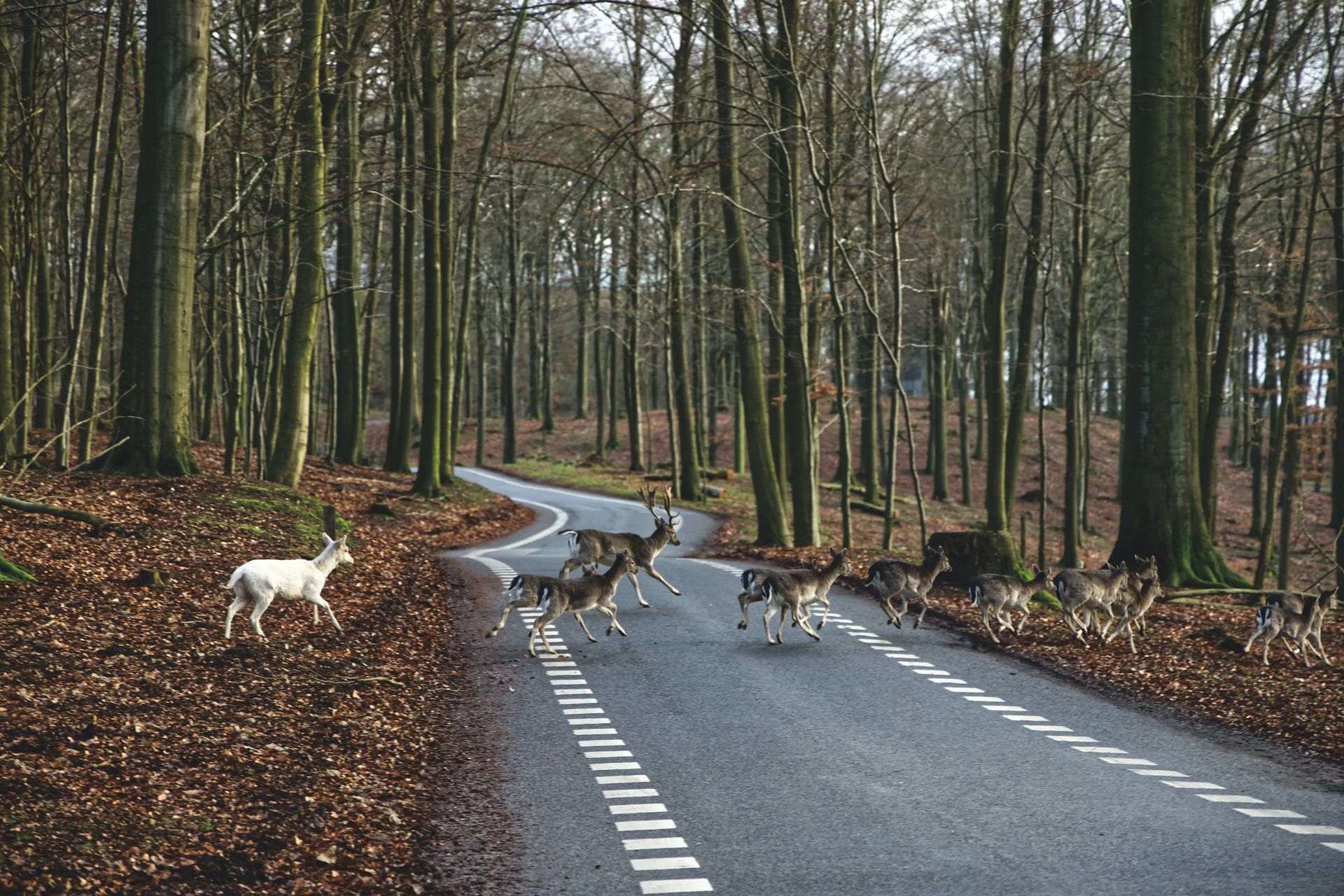
If you drive anywhere near the wooded areas and backroads surrounding Bossier City this time of year, you already know deer season is coming. It means deer are moving more around dusk and dawn, making this a risky stretch of the year. So, how to avoid a deer collision? It starts with knowing when and where deer are most likely to cross and staying alert behind the wheel. Here’s how to lower your risk, and exactly what to check on your car if you do end up hitting one.
Why This Time of Year Is So Risky
Louisiana’s deer breeding season, commonly called the rut, runs broadly from late September through February depending on the parish, with peak activity varying by region. During this window, bucks move more erratically and more often, crossing roads they’d normally avoid as they chase does and compete with other bucks, often with little regard for traffic. Combine that increased movement with shorter daylight hours pushing more of your commute into dusk and dawn, which is exactly when deer are most active, and you get a genuine spike in deer-related collisions across Louisiana roads during the fall and winter months.
Why Dusk and Dawn Matter So Much
Deer are most active during low-light hours, which unfortunately lines up with when a lot of drivers are heading to or from work. Visibility is naturally reduced during these hours, and deer coloring blends in remarkably well with roadside brush and shadows, making them harder to spot until they’re already close to the road. This combination of peak deer activity and reduced visibility is why dusk and dawn driving deserves extra caution specifically during deer season, even on roads that feel perfectly familiar.
How to Reduce Your Risk of a Collision
A few real habits make a meaningful difference in avoiding a deer strike, especially during the riskiest months:
- Slow down in known deer areas, particularly anywhere with wooded cover near the roadway or posted deer crossing signs, and especially during dusk and dawn hours.
- Use your high beams whenever there’s no oncoming traffic. The extra range gives you more time to spot a deer’s eyes reflecting in the distance before it’s close enough to react suddenly.
- Scan the roadside, not just straight ahead. Deer rarely travel completely alone, so if you see one cross, assume others may follow and ease off the gas rather than assuming the road is clear.
- Don’t swerve sharply to avoid a deer. As counterintuitive as it feels in the moment, sudden swerving is a leading cause of more serious single-vehicle crashes during deer encounters, often resulting in a rollover or a collision with another vehicle or a fixed object. Braking firmly in a straight line is generally safer than swerving.
- Pay attention to deer crossing signs. These are placed based on documented activity patterns, not randomly, so they’re a genuine signal to slow down and stay alert through that stretch of road.
What to Do in the Moments After a Collision
If you do strike a deer, the first priority is your own safety and everyone else’s in the vehicle. Pull over to a safe location if the car is still drivable, turn on your hazard lights, and check for injuries before worrying about the vehicle itself. Keep a safe distance from the deer if it’s still in the roadway, since an injured animal can be unpredictable, and don’t attempt to move or handle it. Depending on the severity of the collision, it’s worth calling local authorities to file a report, both for insurance purposes and because a deer carcass left in the roadway poses a hazard to other drivers.
What to Check on Your Vehicle After a Deer Strike
Even if your car seems drivable after a collision, it’s worth doing a careful check before assuming everything is fine. Here’s what deserves attention:
- Headlights, taillights, and turn signals. Impact damage can crack housings or knock wiring loose, and driving with compromised lighting is a real safety issue, especially given that these collisions often happen in low light to begin with.
- Radiator and cooling system. A deer strike to the front end can easily damage the radiator, and a coolant leak that goes unnoticed can lead to overheating. Watch your temperature gauge closely on the drive afterward and have radiator repair looked at promptly if you notice any leaking fluid.
- Hood and front-end alignment. Make sure the hood latches securely and isn’t bent in a way that could pop open while driving, since impact damage can sometimes compromise the latch mechanism even when the hood still looks mostly intact.
- Fluid leaks underneath the vehicle. Check for any fresh puddles or drips after the collision, which could point to damage to the radiator, oil pan, transmission, or power steering lines.
- Wheel alignment and suspension. Even a moderate impact can throw off alignment or damage suspension components, which might not be obvious right away but can affect handling and tire wear over time.
- Tires and wheels. Inspect for any visible damage, especially if the impact was significant enough to push the vehicle off its intended path at all.
Don’t Assume It’s Just Cosmetic
A lot of deer-related damage looks worse than it actually is, with a dented hood or cracked bumper that’s purely cosmetic. But the reverse is also true, and sometimes genuinely serious damage, like a cracked radiator or a bent frame component, can be hiding behind a bumper that looks only lightly scuffed. This is why a proper inspection at an auto repair shop matters even when the car seems to be driving fine immediately afterward, especially before a longer trip.
Filing an Insurance Claim
Deer collisions are typically covered under comprehensive insurance coverage, rather than collision coverage, which is an important distinction since it generally doesn’t affect your rates the same way an at-fault accident would. It’s worth documenting the damage with photos immediately after the incident and keeping any police report if one was filed, since both will help support your claim and ensure your vehicle gets the repairs it actually needs.
Staying Alert Through the Season
Deer season brings a real, measurable increase in roadway risk across Louisiana, but a few consistent habits (slowing down during peak hours, using high beams responsibly, and resisting the urge to swerve) go a long way toward avoiding a collision altogether. And if you do hit one, knowing what to check afterward helps make sure hidden damage doesn’t turn into a bigger problem down the road.
Had a recent run-in with a deer, or just want to make sure your vehicle’s ready for the season ahead? Bring it in, and we’ll give it a thorough inspection to catch anything that isn’t obvious at a glance. Visit our shop or simply reach out to schedule an appointment.